Showing posts with label 1977. Show all posts

22 October 2022

Pino Daniele "Terra mia" (1977)

Terra mia
[debut]
release date: 1977
format: vinyl (2015 reissue)
[album rate: 4 / 5] [3,82]
producer: Claudio Poggi
label: EMI - nationality: Italy

Studio album debut by Pino Daniele (aka Giuseppe Daniele). This reissue was made available following Daniele's death, Mar. 2015.

21 October 2020

Electric Light Orchestra "Out of the Blue" (1977)

Out of the Blue
release date: Oct. 1977
format: digital
[album rate: 3 / 5] [3,06]
producer: Jeff Lynne
label: Jet Records - nationality: England, UK

Track highlights: 1. "Turn to Stone" - 3. "Sweet Talkin' Woman" - 13. "Mr. Blue Sky"

7th studio album by Electric Light Orchestra following one year after the breakthrough album A New World Record and like that produced by primary songwriter and leader of the band, lead vocalist Jeff Lynne. The band has gone through various line-ups but maintained a quite numerous members list, and here they count seven (three of which exclusively play violin and cello). The band has evolved from playing primarily experimental progressive rock with bonds to symphonic rock and hard rock and through a stage with baroque pop to eventually play progressive pop with bold use of elements from funk and disco - and needless say: with a much more evident mainstream appeal.
I recall this very album from when it wasn't all brand new and they still hadn't released the successor Discovery (May 1979). In Feb. 1979 (at age 13) I happened to be in London with our class, and several mates from class both purchased the predecessor together with this one that I only knew little about. I recall from some teen club evenings at the local church (!) they played this quite a bit. From our journey to London, I remember buying albums with The Police (Outlandos d'amour and Regatta de blanc), Pink Floyd (The Wall) and Dire Straits (the debut) and a few others that I have now forgotten about - alongside a handful of releases for my older brother (I brought a handwritten list of titles to purchase for him). Unfortunately, I didn't yet know anything to the existence of punk rock or new wave at this point - that only came to my attention upon my return later that year, so I was more into music that I already knew of, and especially heavily inspired by my brother's music taste (except The Police, which he didn't play). But what I soon learned was that I didn't like Electric Light Orchestra - not one bit! In fact, I loathed the disco and progressive pop harmonies that my class mates soon praised as the new big thing alongside music by Patrick Hernandez, Kelly Marie, and / or Bee Gees.
The album is included in "1001 Albums You Must Hear Before You Die" as the only by ELO, as they were commonly known. Out of the Blue is the band's second consecutive Platinum-selling studio release, which eventually was surpassed in sales numbers by Discovery and Time (1981). The only reason I have put it here is that I wanted to revisit an album I really never understood. And still don't, it turns out! From the aforementioned book: "Released at the height of disco, Out Of The Blue was seen by some as a futuristic fish out of water." As much as I relate to that picture, it's probably not in the most positive of ways. To me, this is awkwardly over-arranged. Waaaay too much funk and disco, and not just that but with so many synths and strings that it should belong in space. And it makes me think of a musical wedding cake: Mostly impressive and nice to look at, but who really wants to consume that?! In my ears it doesn't fall far from the ABBA and Olivia Newton John melody structures that I disliked then as I still do to some minor degree nowadays. I have definitely grown much milder when it comes to polished pop of the 80s and 70s, and I do understand the qualities of a lot of music that I didn't like at a younger age, but ELO from '76 and onwards still doesn't do much for me. "Mr. Blue Sky" was a hit but would never have seen the light of day without The Beatles and The Moody Blues. "Turn to Stone" was another major hit back then - at least in Europe - but to me that was, and still is, a pastiche - a conglomerate of songs by artists suchs as Giorgio Moroder, Hot Chocolate, Earth, Wind & Fire merged with some Stevie Wonder-arrangements and equal parts of 10cc smoothness - all artists I'd rather listen to than this fine musical mish-mash that remains far from distinctive original.
Out of the Blue is still a cornerstone in the discography of Electric Light Orchestra no matter what I think of it, but I'm not in a position where I feel that I should actually recommend it. If asked back then, I would most likely have handed it 1 or max 2 stars - basically, suggesting it was crap, so in that respect I have come (much) closer in accepting it as genuine acceptable music. It's still over-produced, over-arranged and it didn't do much good for music, imho. But hey, wasn't I into punk?! And punk rock was in many ways a response to exactly this kind of music, and I still do understand the reaction and need to change music as it was back in the mid-70s.
[ allmusic.com 3,5 / 5, Rolling Stone, The Guardian 3 / 5 stars ]


~ ~ ~
This post is part of MyMusicJourney, which enlists key releases that have shaped my musical taste when growing up and until age 14. Most of these releases come from my parents' and / or my older brother's collection.

26 June 2020

Kraftwerk "Trans Europa Express" (1977)

2009 cover
Trans Europa Express
release date: Mar. 1977
format: cd (2009 remaster)
[album rate: 4,5 / 5] [4,28]
producer: Ralf Hütter, Florian Schneider
label: Kling Klang / EMI - nationality: Germany

Track highlights: 1. "Europa Endlos" (4,5 / 5) - 2. "Spiegelsaal" (4,5 / 5) - 3. "Schaufensterpuppen" - 4. "Trans Europa Express" (5 / 5) (live) - 5. "Metall auf Metall" - 6. "Abzug" - 7. "Franz Schubert"

6th studio album by Kraftwerk following Radio-Aktivität (Oct. 1975) is the band's second album in their most classic and longest-lasting line-up. Ralf Hütter and Florian Schneider, who are credited the majority of the tracks are both credited on vocals, synthesizers and 'electronics'. Additionally, Hütter plays on 'Vako Orchestron' and 'synthanorma sequences', while Schneider also handles vocoders and 'votrax'. Apart from the two 'band leaders', the two remaining members are percussionists Wolfgang Flür and Karl Bartos, who are solely credited 'electronic percussion'.
At first, the album sounds much like a close progression from the '75 album, but new electronic instruments add completely new possibilities and sound bits to the band's electronic soundscape. With the use of especially sequencers, vocoders and electric percussion, the band once again marks itself out as musical avant-garde and perhaps takes a larger leap in the electronic genre than the one you find from Autobahn (1974) to the predecessor. Kraftwerk has now moved away from the small electronic quirks we find on the '75 album, and instead they have in a way focused the musical expression - made it more rigorous without simplifying - and at the same time they have created the band's most coherent album to date.
The highlighted tracks above are seven out of eight from an album with no fillers - last composition is the 47 seconds "Endlos Endlos", which basically only serve to resume the album's main theme and melody from track #1, so that the album ends the way it starts. In fact, there are fluid transitions between many of the tracks, even though they appear as distinctively different compositions.
Trans Europa Express was (as the second of the band's classic albums) released in both a German version and in a versioned English album with translated song titles and lyrics titled Trans Europe Express. The album landed at number #32 in Germany, but peaked at number #2 in France, and as number #8 in Italy. Two selected tracks: the 4th and 3th tracks, respectively, were released as singles without charting.
The album was released to generally positive reviews, but over the years it status has heightened to one of modern music's most significant cornerstones. In retrospect, it has achieved finer status than Autobahn and is naturally included in countless lists of the best albums of all time, e.g. "The 500 Greatest Albums of All Time" (Rolling Stone), "The 100 Greatest Albums Ever Made" (Mojo), "Top 100 Albums of All Time" (NME), "The 50 Best Albums of the 70s" (Q Magazine), "The 20 Most Influential Albums" (The Times), etc. etc. - just as the album is naturally found in "1001 Albums You Must Hear Before You Die".
The album has been released in several first editions with different front covers. The first German and some European editions came with a black and white cover with Hütter and Schneider flanked by Bartos and Flür (original Kling Klang / EMI releases), and a (second) colored cover with Schneider and Hütter on the right of the picture (Capitol editions) released in the UK, Scandinavia, and in the Netherlands, and with Kraftwerk's own 2009 remastered edition, the album was launched with a brand new cover without the four band members.
Trans Europa Express is possibly Kraftwerk's finest and greatest achievement. Autobahn, with its groundbreaking form, upholds a very special positions, and Die Mensch-Maschine and Computerwelt have their obvious individual strengths, but both lack a tiny bits in absolute coherency, which the band's brilliant 77 album contains.
Personally, I didn't listen to the album until sometime in the 80s, and unfortunately only after becoming acquainted with bands and artists who have clearly been heavily inspired by Kraftwerk and this very album. Imho, the album is of huge importance for the musical heritage - for the development of synthpop, new romantic, and other related styles. It's hard to imagine the distinctive sound of many artists from diverse styles without thinking of Trans Europa Express. When not counted among my top three favourites from 1977, the album is only absent because of the fact that I wasn't exactly enthusiastic about the electronic genre until much later. Back then, I focused on punk rock and post punk during this period, and here are three albums with three of my biggest favorites from the time: The Ramones, The Clash, and The Jam - artists I listened to far more than the brilliant German band. By detours I discovered Kraftwerk's music and the band's enormous musical influence - and it's for that reason alone I pay tribute to the band and this album. Another note of interest, is the colossal difference in sound production quality when comparing releases by the aforementioned punk bands to that of Kraftwerk releases from the same period. In this way, Kraftwerk stands out as a band from an almost distant future. The album is also demanding to listen to if you subsequently listen to (perhaps) more popular releases from bands such as Human League, Devo, Yellow Magic Orchestra, New Order, Depeche Mode, Per Shop Boys, and then it even seems obvious to compare with much later releases from artists like The Orb, Sigur Rós, Mogwai, The Chemical Brothers, etc.
Highly recommended.
[ allmusic.com, Rolling Stone, Mojo, Q Magazine, Uncut 5 / 5 stars ]


1977 org. cover
l-r: Bartos, Schneider
Hütter, Flür
  1977 UK cover
l-r: Flür, Bartos
Schneider, Hütter

Note the two founders of Kraftwerk, Hútter and Schneider
are in grey suits, while the two newcomers, Flür and Bartos - by the way
not credited one single track - are dressed in black suits.

07 November 2015

Thin Lizzy "Bad Reputation" (1977)

Bad Reputation
release date: Sep. 2, 1977
format: cd (2011 remaster)
[album rate: 3,5 / 5] [3,72]
producer: Tony Visconti
label: Vertigo Records - nationality: Ireland

Track highlights: 1. "Soldier of Fortune" - 2. "Bad Reputation" - 4. "Southbound" (5 / 5) - 5. "Dancing in the Moonlight (It's Caught Me in Its Spotlight)" (4 / 5) - 6. "Killer Without a Cause" - 7. "Downtown Sundown" - 8. "That Woman's Gonna Break Your Heart"

8th studio album by Thin Lizzy following the uneven Johnny the Fox (Oct. 1976) is the final with a stable line-up in more than three years. The album is the last to feature guitarist Brian Robertson who is only credited on three tracks (tracks #3, #6, and #8) due to conflicts within the band about musical direction - at the time of the release Robertson was no longer an official member, which is suggested by the album cover depicting only Lynott, Gorham, and Downey. Interestingly, it's the first collaboration work with already legendary producer Tony Visconti, which I think, may come through as a fine instrumental balance throughout the album. Apparently, the band had been through a phase of dispute concerning musical directions, which seems quite natural as Lynott and Downey had been together through several stylistic changes, and with Gorham and Robertson, the band had pursued a bolder hard rock-style compared to the early albums without the twin-guitars. Also, some of Lynott's best songwriting may shine stronger in his slower and more ballad-shaped compositions, which produced a bit of a contrast to much of the band's newer style.
Bad Reputations may not be as strong or consistent as Jailbreak, but it contains some really fine songs, including "Southbound", a song I consider among the band's top-3 songs ever, and it's certainly an improvement compared to Johnny the Fox.
Recommended.
[ allmusic.com 4,5 / 5 stars ]

10 January 2015

Bryan Ferry "In Your Mind" (1977)

In Your Mind
release date: Feb. 1977
format: vinyl / cd (2007 reissue)
[album rate: 3 / 5] [3,18]
producer: Bryan Ferry, Steve Nye
label: E.G. - nationality: England, UK

Track highlights: 1. This Is Tomorrow" - 5. "Tokyo Joe" - 7. "Rock of Ages"

4th solo album by Bryan Ferry and his first album with original songs since the disbandment of Roxy Music in 1976 after which he had released the solo album Let's Stick Together (Sep. 1976).

20 July 2014

Jacques Brel "Brel (aka Les marquises)" (1977)

Brel (aka Les marquises)
release date: Nov. 17, 1977
format: vinyl (gatefold)
[album rate: 4 / 5] [3,77]
producer: ? (rec. by Gerhard Lehner)
label: Barclay - nationality: Belgium

Track highlights: A) 1. "Jaurès" - 2. "La ville s'endormait" - 3. "Vieillir" - 4. "Le bon Dieu" - - B) 1. "Les remparts de Varsovie" - 2. "Voir un ami pleurer" - 4. "Jojo" - 6. "Les Marquises"

14th and final studio album by Jacques Brel following five years after Ne me quitte pas (Sep. 1972), which is made up of new recordings of Brel's most famous songs making this his first album with new material in 9 years.

10 October 2013

Peter Gabriel "Peter Gabriel" (1) (1977)

Peter Gabriel
(1)
[debut]
release date: Feb. 10, 1977
format: cd (2003 remaster)
[album rate: 3,5 / 5] [3,68]
producer: Bob Ezrin
label: Virgin Japan / Real World - nationality: England, UK


Studio solo album debut by Peter Gabriel released two years after leaving the succesful British prog rock band Genesis is Gabriel's first of four consecutive studio albums with identical titles - all of which originally released on Charisma Records. The album is commonly referred to as "Peter Gabriel 1" / "Peter Gabriel I"or simply: 'Car' with reference to the front cover. Gabriel has gathered up a list of fine backing musicians for the album, including guitarist Robert Fripp (of King Crimson), and a list of American musicians: guitarist Steve Hunter, session bassist Tony Levin, keyboardist Larry Fast, drummer Allan Schwartzberg and percussionist Jimmy Maelen. Fripp would re-join Gabriel on his two following studio releases, Fast on the next three albums, and Tony Levin would be a stable musician on all of Gabriel's future albums.
Stilistically, Gabriel is still working in the style of prog rock but has turned his back on the longer progressive part of the music and turned to a combo of Lou Reed / David Bowie / Brian Eno / Roxy Music-type of glam rock and art rock using both guitars and synths.
It's an album that refers to and builds on the established traditions of popular music, instead of embracing elements from the punk rock invironment, but it's still a mighty fine release taking rock to new grounds. The album is the first of three Peter Gabriel albums to be included in "1001 Albums You Must Hear Before You Die".
[ allmusic.com 4,5 / 5, Record Mirror 4 / 5, Uncut 3,5 / 5, Q Magazine 3 / 5 stars ]

04 October 2013

T. Rex "Dandy in the Underworld" (1977)

Dandy in the Underworld
release date: Mar. 11, 1977
format: cd
[album rate: 3,5 / 5] [3,28]
producer: Marc Bolan
label: EMI Records - nationality: England, UK

Track highlights: 1. "Dandy in the Underworld" - 4. "I'm a Fool for You Girl" - 5. "I Love to Boogie" - 7. "Jason B. Sad" - 12. "Teen Riot Structure"

12th and final studio album by T. Rex. As usual all tracks were written by Bolan and the band name served as a mere pseudonym for Bolan himself as the only lasting member at this point was bassist Steve Currie who had been in the band since 1970. The album was a return to form and to laud as it peaked at number #26 on the album chart list despite not being a punk rock or new wave release. The previous album Futuristic Dragon (1976) was despite its inclusion of funk and soul more in sync with his material from the early 70s than this, where Bolan again has simplified the musical expression by turning down the glam rock side and turning up boogie rock, which at this point a band like Status Quo had success with. A few tracks even have art rock or new wave elements, and the album is by many critics seen as Bolan's swan song. He was back in people's mind as TV host for music program featuring new artists, and he even toured with one of Britain's very first punk rock bands, The Damned. A few years later gothic rock became associated with glam rock and Bolan was one of the finest origins but he didn't experience a second glorification as he died in a car crash, Sep. 1977.

05 May 2013

Lou Reed "Walk on the Wild Side - The Best of Lou Reed" (1977)

Walk on the Wild Side - The Best of Lou Reed (compilation)
release date: Apr. 1977
format: vinyl (1984 reissue) / cd (1990 reissue)
[album rate: 4 / 5]
producer: various
label: RCA International - nationality: USA

First best of compilation by Lou Reed solo, released on RCA International at the end of his contract with RCA (issued on cd, Oct. 25, 1990). The album comes in several versions with a number of bonus tracks. The original vinyl version contains 11 fine tracks, although, they don't really suffice, and you only wonder why they didn't bother making it a double album.
[ allmusic.com 4,5 / 5 stars ]

20 April 2013

Neil Young "American Stars 'n Bars" (1977)

American Stars 'n Bars
release date: Jun. 20, 1977
format: cd (2003 reissue)
[album rate: 3 / 5] [3,16]
producer: David Briggs & Neil Young with Tim Mulligan
label: Reprise Records - nationality: Canada

Track highlights: 1. "The Old Country Waltz" - 5. "Bite the Bullet" - 7. "Will to Love" (3,5 / 5) - 8. "Like a Hurricane" (5 / 5)

8th studio album by Neil Young is actually a really strange collection of songs, and a bit of a 'weird' release. It contains tracks with Crazy Horse and The Bullets recorded over a period of almost 30 months, which explains the variety of songs, but what makes it strange, is its style. Some songs are pure country and country folk with fiddle and banjo, whereas others are electrified folk rock / blues rock and strong songs, but stylistically far from other tracks. The recordings stretch back to sessions around the Zuma album. Whether or not it's the case, some tracks could be left-overs that didn't make it on that album, or were excluded from Tonight's the Night, and other tracks seem more associated with Young re-connecting with his old friend Stephen Stills - again, explaining the country references. Apparently, five of the tracks on the album were intended for an unreleased album Chrome Dreams, and two tracks for another unreleased album, Homegrown, which included several tracks that were released with Tonight's the Night.
The most memorable track is the giant "Like a Hurricane" - a true modern classic, which is the album's biggest asset. Some of the songs date back to 1974 and feature Emmylou Harris and Linda Ronstadt on vocals, some songs are band material and others only feature Neil on harmonica and acoustic guitar. It's really too much of a blend but on the other hand it does contain really fine single tracks. Basically, it's more like a compilation album. My initial feelings about it had me think of it as a minor and negligible work, but it has grown on me after some time. Perhaps, just because the tracks are quite good on their own.
[ allmusic.com 3 / 5 stars, Rolling Stone review ]

02 March 2013

Supertramp "Even in the Quietest Moments..." (1977)

Even tn the Quietest Moments...
release date: Apr. 1977
format: digital
[album rate: 3 / 5] [3,12]
producer: Supertramp
label: A&M Records - nationality: England, UK

Track highlights: 1. "Give a Little Bit" (4 / 5) - 3. "Even in the Quietest Moments" - 4. "Downstream" - 6. "From Now On" - 7. "Fool's Overture"

5th studio album by Supertramp. Two years under its way the album shows the band's move into more mainstream territory. The album is, like its front cover suggests, also piano-founded music. It's soft rock more than anything and it's also fine songwriting, although, I also find it a bit on the dull side.
[ allmusic.com 3,5 stars ]

23 February 2013

10cc "Deceptive Bends" (1977)

Deceptive Bends
release date: May 1977
format: cd
[album rate: 2,5 / 5]

Track highlights: 1. "Good Morning Judge" (2,5 / 5) - 2. "The Things We Do for Love" - 4. "People in Love" (3 / 5) - 9. "Feel the Benefit (Parts 1, 2, & 3)" (2,5 / 5)

5th studio album by 10cc released on Mercury Records and produced by the band. This was the first album release by 10cc after Gofley and Creme had left. The band has never been a favourite of mine but it seems they were always around in the 1970s. You cannot neglect the fact that they were extremely popular and somehow they were always able to have at least one really good song on each of their albums. In retrospect it only seems almost bizarre that they made this music at the same time as Ramones released Leave Home, Elvis Costello and The Clash launched their debut albums, as well as all the others of the British punk era - it all exploded and yet there was still room for Pink Floyd, Bowie, Eno et al with new frontier music. 10cc was already a pop / rock dinosaur - not revolutionary, not 'art' enough to be avantgarde and yet still labelled progressive enough to be anything but just mainstream pop. It's like the band flourished in its own little bubble, which became ever smaller and smaller as new artists attracted its fans.
[ allmusic.com 4 / 5 stars ]

24 January 2013

Tom Waits "Foreign Affairs" (1977)

Foreign Affairs
release date: Sep. 24, 1977
format: digital
[album rate: 3,5 / 5] [3,68]
producer: Bones Howe
label: Asylum Records - nationality: USA

Track highlights: 2. "Muriel" - 3. "I Never Talk to Strangers (feat. Bette Midler)" - 5. "A Sight for Sore Eyes" (4 / 5) - 6. "Potter's Field" - 7. "Burma-Shave" - 9. "Foreign Affair" (4 / 5)

5th studio album by Tom Waits following one year after his landmark album Small Change is also his fourth consecutive album with Bones Howe as producer.
Once again Waits produces a fine collection of songs, although my impression tells me that the album is a bit of a repeat of what he has released up until this point, which in a way might sound like he is stagnating, with no real musical development, but one could then argue that he is simply sticking to a highly original style, and why necessarily change what has proven to work?
The album differs from his other releases by being close to a concept album with a detective-narrator, Nickel, who is an eyewitness to a 'film-noir-Chandler-esque-murder-story' of sorts. Bette Midler and Waits formed a couple in the years '76 / 77 and she sings on track #3.
Some artists don't need to show much artistic development - especially when they continue to make fine and relevant songs, and this album do contain several fine compositions like the ones highlighted above.

29 December 2012

David Bowie " 'Heroes' " (1977)

'Heroes'
release date: Oct. 14, 1977
format: vinyl (1984 reissue) / digital
[album rate: 3,5 / 5] [3,33]
producer: David Bowie, Tony Visconti
label: RCA International - nationality: England, UK

Track highlights: 3. " 'Heroes' " (5 / 5) - 4. "Sons of the Silent Age"

12th studio album by David Bowie and his second in "the Berlin trilogy" released only 9 months following the album Low.
The album has status as one of the finest of rock, or more precisely: art rock. It's Bowie's seventh studio album to be enlisted in "1001 Albums You Must Hear Before You Die".
I purchased the album at some point in the mid-80s alongside the predecessor Low after re-discovering Bowie. I had been fascinated by Scary Monsters (And Super Creeps) (1980) and simply loved his The Rise and Fall of Ziggy Stardust... (1972) album, so it was a natural option to turn to his acclaimed Berlin-trilogy. I do understand how he was the notorious musical chameleon, and I was prepared to meet a diverse album, but at the same time, I was quite familiar with the fine title track, so I may have been slightly excited about getting the full album. I only felt bewildered as to why I didn't like this so-called masterpiece. Only the title-track felt like a fine song, but how that one song had everyone talking about it and lauding the album as something otherworldly was, and basically still is, beyond my comprehension.
In Bowie's Berlin trilogy 'Heroes' is his second, and that's also the way I rate them: Low, as the first is the best, and then the quality drops one by one. making Lodger (1979) the poorest.
[ allmusic.com, Select 5 / 5, Rolling Stone 4,5 / 5, Blender, NME 4 / 5 stars ]

28 December 2012

David Bowie "Low" (1977)

Low
release date: Jan. 14, 1977
format: vinyl (1983 reissue) / digital
[album rate: 3,5 / 5] [3,42]
producer: David Bowie, Tony Visconti
label: RCA International - nationality: (West) Germany

Track highlights: 1. "Speed of Life" - 4. "Sound and Vision" - 6. "Be My Wife"

11th studio album by David Bowie and his first in what is known as "the Berlin trilogy" - followed by the albums 'Heroes' (Oct. 1977) and Lodger (1979).
The album is Bowie's sixth studio album to be enlisted in "1001 Albums You Must Hear Before You Die".
I do know how people refer to the trilogy as something spectacular, but I never really enjoyed any of the albums all that much. "Sound and Vision" is a great track, but in my ears, I simply cannot understand how what all the fuzz is about. Avant garde Oooooh yes! I guess that's what you have to say when melodies are absent and the sound is unlike anything else but mostly feels like sand in ears.
Not recommended.
[ allmusic.com, Rolling Stone, Q Magazine, Blender 5 / 5, NME 4,5 / 5, Spin 4 / 5 stars ]

The Beatles "Love Songs" (1977)

Love Songs (compilation)
release date: Oct. 1977
format: vinyl (1978, Yugoslavia)
[album rate: 4 / 5]
producer: George Martin
label: Jugoton - nationality: England, UK

Compilation album by The Beatles originally released by Parlophone.

27 December 2012

The Beatles "The Beatles at the Hollywood Bowl" (1977) (live)

The Beatles at the Hollywood Bowl (live)
release date: May 1977
format: vinyl (gatefold - EMTV 4)
[album rate: 4 / 5]
producer: Voyle Gilmore; George Martin (final mixdown)
label: Parlophone - nationality: England, UK

Live album by The Beatles recorded at the Hollywood Bowl Aug. 30, 1965 except tracks #A6 to #B1, #B4 to #B6 recorded Aug. 23, 1964.
The album is one of my first vinyl acquisitions in the 1970s.

[ allmusic.com, Rolling Stone 4 / 5 stars ]

23 November 2012

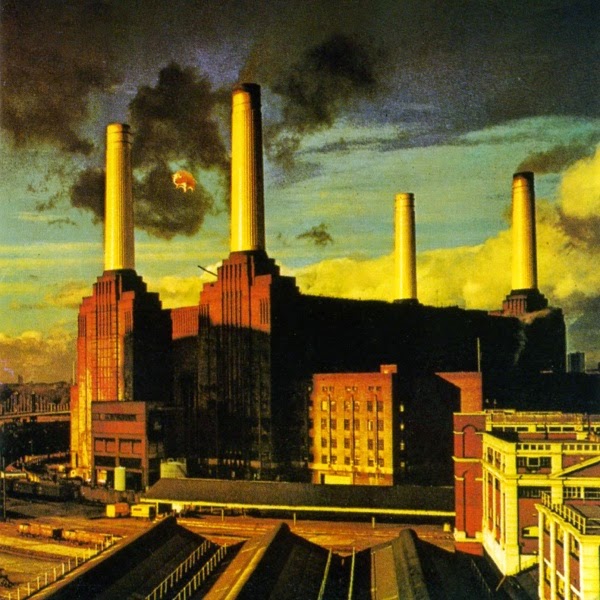
Pink Floyd "Animals" (1977)

Animals
release date: Jan. 23, 1977
format: digital
[album rate: 2,5 / 5]
producer: Pink Floyd
label: Harvest / EMI - nationality: England, UK

Track highlights: 1. "Pigs on the Wing" - 3. "Pigs (Three Different Ones)"

10th studio album by Pink Floyd is another conceptual album but also a change of style. The overall theme is loosely based on George Orwell's "Animal Farm" and therefore a hierarchy of animals reflecting their value and / or status in society. It's also said to be a response to the British punk rock movement in which the band saw positive changes with music being political- and social-minded, but Animals still presents music on its own terms like a secluded and inhuman space. All previous albums gave room for all band members contributing with his own compositions on equal terms, but here I think, Roger Waters for the first time positions himself as the songwriter of the band, and unfortunately at the sacrifice of the band's unity. Waters is credited as text and songwriter on all compositions, only Gilmour is co-writer of the music for the track "Dogs". To me this is more like The Final Cut (1983) than any of their other albums except for this one being a more indistinct stylistic release with both bits of psychedelic rock as on earlier albums, and progressive rock art rock as on the tighter and more successful Wish You Were Here (1975). It's like the narration of an idea, the concept, and one man's story from start to finish in what I find a monotone and simplistic way, in contrast to the more diverse and spacious tale of The Wall (1979) with much more poignant songs.
[ allmusic.com 4 / 5, The Daily Telegraph 3 / 5, Rolling Stone Album Guide 2 / 5 stars ]

12 November 2012

Van Morrison "A Period of Transition" (1977)

A Period of Transition
release date: Apr. 1977
format: cd (1997 remaster)
[album rate: 3,5 / 5] [3,44]
producer: Van Morrison & Mac Rebennack (Dr. John)
label: Polydor Records - nationality: Northern Ireland, UK

Track highlights: 1. "You Gotta Make It Through the World" - 3. "The Eternal Kansas City" - 4. "Joyous Sound" - 6. "Heavy Connection" (live)
[ full album ]

9th studio album by Van Morrison originally released on Warner Bros. and for the first time in many years an album with a co-producer, which may be a sign of Van's uncertainty concerning musical direction. Anyway, Mac Rebennack, or: Dr. John, who had also featured at The Band's The Last Waltz farewell concert with Morrison in '76. Stylistically, the title suggest what it basically is: an album revealing other influences and something else rather than what you had come to expect from Van the Man. It's like reasoning on his labour with the predecessor, Veedon Fleece - released nearly three years ago, an album that not many of the time really understood, and which have him debating how people have their own expectations. So, in order to make something different, with success, you have to prepare the listener not to expect what is connected with tradition.
The album presents vocal jazz and traditional rhythm & blues in a spiritual shape, which is something different from his previous albums. There's a rock roots sensation to all compositions that you could associate with that of The Band and Dr. John - effectively a strict American tradition.
The album failed as a strong return, and critics found it unfocused and unexciting.
Strong identifying songs may be absent on this album, but it has a warm feel and sincerity, and it's like his most jazz-oriented album to date. I don't find it among his best, but it's an album not to dismiss.
[ allmsuic.com 3 / 5, Rolling Stone 2 / 5 stars ]

11 November 2012

Jethro Tull "Songs From the Wood" (1977)

Songs From the Wood
release date: Feb. 11, 1977
format: vinyl / digital
[album rate: 3,5 / 5] [3,58]
producer: Ian Anderson
label: Chrysalis Records - nationality: England, UK

Track highlights: 1. "Songs From the Wood" - 2. "Jack-in-the-Green" (4 / 5) - 3. "Cup of Wonder" (4 / 5) - 4. "Hunting Girl" - 5. "Ring Out, Solstice Bells" - 6. "Velvet Green" (4 / 5) - 7. "The Whistler"

10th studio album by Jethro Tull released after the '76 studio album Too Old to Rock 'n' Roll: Too Young to Die!, a less successful Tull album, which saw a change of bassist as Jeffrey Hammond was replaced by John Glascock. Prior to this, additional keyboardist David Palmer was officially included in the band, which by then counted six members.
The album signals a change of style with more focus on British pagan folklore in a blend of progressive rock, folk and hard rock. The result is a simpler musical universe and the tracks are accordingly of shorter playing time.
This was one of two vinyl albums by Jethro Tull that I was given by my older brother when he moved out of our family house back in the early 80s. I really liked the album before that, and often had it on my turntable while playing with my Lego...
[ allmusic.com, Sputnik Music 4 / 5 stars ]