Showing posts with label 1990s. Show all posts

09 August 2023

Karen Carpenter "Karen Carpenter" (1996)

Karen Carpenter
[debut]
release date: Sep. 11, 1996
format: cd
[album rate: 3,5 / 5] [3,72]
producer: Phil Ramone
label: A&M Records - nationality: USA

Track highlights: 1. "Lovelines" (4 / 5) - 3. "If I Had You" - 4. "Making Love in the Afternoon" - 5. "If We Try" - 6. "Remember When Lovin' Took All Night" - 9. "Make Believe It's Your First Time" - 11. "Still Crazy After All These Years" - 12. "Last One Singin' the Blues" (bonus track)

Studio debut and only album by Karen Carpenter recorded and mixed in between albums with the Carpenters. In the chronology of the duo, the album stands in between Christmas Portrait (1978) and Made in America (1981), the duo's ninth and tenth albums and recorded at a time when Richard Carpenter went through treatment for substance addiction. With Richard being indisposed, Karen was curious to see if she could do something as a solo artist and A&M Records were in support of the idea. That is, until executives (and brother Richard) listened to the final mix of the album and the management then decided to shelve the album - naturally, to Karen's regret. Alledgedly, they found it missing something. Or: they had their minds up for something else. Karen didn't experience the album release, which wasn't approved of until 1996. In the liner notes, both Richard Carpenter and producer Phil Ramone recount a few of the details about the recordings as well as their wish to see the album released the way it had been mixed in 1980. Track #9 was soon re-recorded but first found its way to the final album by the Carpenters Voice of the Heart (Oct. 1983), and four other songs (tracks #1, #3, #5, and #6) were all included on the thirteenth studio album Lovelines (Oct. 1989), posthumously issued after Karen's passing - Richard had assembled previously unreleased songs for the occasion. Two songs (tracks #8 and #11) later found their way to the compilation album From the Top (1991). All of this documents the weight of this album, although, key people thought otherwise back in the day.
To me, the album is like a rough diamond. It's full of great tracks with Karen's wonderful vocal making everything more delightful. Yes, there are attempts of making this sound more like other contemporary artists as contrary to the Carpenters' unique sound but I think, Ramone did a mighty fine job. Some tracks have a certain otherness - misinterpreted as Karen's detachment, or missing involvement. I think, mainly due to her approach to singing other people's songs. "Lovelines" is up there among the absolute best tracks by the duo, and it's only confusing why record label executives weren't able to see this as pure gold. The only explanation is that they had their minds set on 'something else' than what they already had and this was too close to that.
With Karen Carpenter we're blessed by the existence of unique recordings, although, in 1996 they appear as somewhat out of time. But only somewhat 'cause Karen's vocal will sell sand in the Sahara and everyone should know that.
Recommended.

30 November 2022

Mazzy Star "Among My Swan" (1996)

Among My Swan

release date: Oct. 29, 1996
format: cd
[album rate: 3,5 / 5] [3,42]
producer: David Roback, Hope Sandoval
label: Capitol Records - nationality: USA

Track highlights: 1. "Disappear" - 2. "Flowers in December" (4 / 5) (live) - 3. "Rhymes of an Hour" - 5. "Take Everything" - 7. "All Your Sisters" - 8. "I've Been Let Down"

3rd studio album by Mazzy Star follows (another) three years after their sophomore So Tonight That I Might See (1993). All songs here are credited David Roback and Hope Sandoval.
The album introduces a change of style as the album is primarily founded on the use of acoustic guitars instead of the feedback electric guitar sound on the first two albums, and the bond to both the 'baroque pop' of the '60s as well as to Velvet Underground has been accentuated.
The album produced the UK top-40 single "Flowers in December" but apart from that the album was seen as a lesser album, and also music critics seemed less drawn to the change of style.
After the release, the band went on a live tour and also began work on a follow-up, but they found the demands of the record label management intolerable with "the money people" interfering in their creative craftmanship and Sandoval and Roback eventually asked to be released from their contractual obligations. Without officially dissolving, the band went on a hiatus in '97 that should last fourteen years and Among My Swan was eventually followed by the fourth album in 2013, Seasons of Your Day.
I find this one on a completely different level than the first two albums. It simply tastes too much of the '60s. It's good but not really essential.
[ allmusic.com 3.5 / 5 stars ]

05 October 2022

Mazzy Star "So Tonight That I Might See" (1993)

So Tonight That I Might See

release date: Oct. 5, 1993
format: cd / vinyl (2022 reissue)
[album rate: 4 / 5] [3,76]
producer: David Roback
label: Capitol Records - nationality: USA

Track highlights: 1. "Fade Into You" (4,5 / 5) (live on Later) - 2. "Bells Ring" (4 / 5) - 3. "Mary of Silence" - 7. "Unreflected" - 9. "Into Dust" - 10. "So Tonight That I Might See"

2nd studio album by Mazzy Star following nearly 3½ years after the debut She Hangs Brightly (1990). Since then, the band signed with Capitol after the Rough Trade division closed in the US, and it appears that although both Keith Mitchell and Will Cooper of Opal participate on the album, they are merely additional personnel, and Mazzy Star has become what it basically always was: the duo-project of composer, guitarist and pianist David Roback and songwriter, vocalist and guitarist Hope Sandoval.
At first, the album sounds much alike the predecessor, in tone and especially sound, as the style has become even darker and mesmerising with drone-like guitar-sequences with Sandoval's haunting vocal on top.
"Fade into You" became the band's first and only top-100 single in the US peaking at #44; however, the band may never have aimed at making hit songs and becoming mainstream artists, but the album is often found listed among the best Dream Pop albums ever made [Pitchfork's 30 best dream pop albums].
The album comes out as the aural version of a highly original dream landscape - both hauntingly beautiful and disturbing at the same time. Roback and Sandoval appear more laid back on this, although, some tracks are 'noise rock' influenced and the title track sounds unimaginable without thinking of "The End" by The Doors and (perhaps also) "Heroin" by Velvet Underground, but overall I find it bettering their debut. This is simply their best studio album.
Now, did anyone say Lana Del Rey? Well, I betcha she heard this one!
Highly recommended.
[ allmusic.com, Uncut 4,5 / 5, NME, Sputnikmusic 4 / 5, Soundlab 5 / 5 stars ]

03 May 2022

Prefab Sprout "Jordan: The Comeback" (1990)

Jordan: The Comeback

release date: Sep. 7, 1990
format: vinyl / cd
[album rate: 4 / 5]
producer: Thomas Dolby
label: Kitchenware / CBS - nationality: England, UK

Track highlights: 1. "Looking for Atlantis" (4 / 5) - 2. "Wild Horses" (4 / 5) - 3. "Machine Gun Ibiza" - 4. "We Let the Stars Go" - 5. "Carnival 2000" (4 / 5) - 6. "Jordan: The Comeback" (4 / 5) - 7. "Jesse James Symphony" (4 / 5) - 8. "Jesse James Bolero" - 10. "All the World Loves Lovers" - 12. "Ice Maiden" - 13. "Paris Smith" - 15. "One of the Broken" (4 / 5) - 18. "Scarlet Nights" - 19. "Doo-Wop in Harlem" (4 / 5) (live)

5th studio album by Northhern English band Prefab Sprout following Protest Songs (Jun. 1989). The band has had a changing line-up but the two McAloon brothers have been the only stable members. On this, the band consists of what was the most stable line-up over a period of 13 years from 1984-97: Paddy McAloon on vocals, guitars, keyboards, Martin McAloon on bass, Wendy Smith credited vocals, guitars, keyboards, and Neil Conti on drums and percussion. Although, the band is founded with two brothers, the undisputed leader is older brother, Paddy, who writes (near) all songs for the band - not only for this album but on all their studio releases from 1982 to present days).
Jordan: The Comeback is untraditionally long, in terms of total running time for a 2-sided longplayer exceeding more than 64 minutes. It peaked at number #7 on the albums chart in the UK (by the band only surpassed by the '88 album, From Langley Park to Memphis, reaching number #5). The track "Carnival 2000" had a lot of airplay on the national Danish radio station P3 that year, but other than that, the album contains so many great tracks that the whole album is the biggest hit of the release., which initially made me confusing it as a compilation. I owned a cd issue for years and only as of 2022 managed to get hold of a fine original vinyl issue.
Prefab Sprout initiated their career by playing guitar-founded jangle pop but this one (like the majority of their albums) is dominated by a sophisti-pop style that loans from other genres and styles, and the album simply stands as one the best pop /rock albums of the 1990s, in my opinion.
Highly recommended.
[ allmusic.com 4,5 / 5, SputnikMusic 5 / 5 stars ]

22 July 2021

Julian Cope "Interpreter" (1996)

Interpreter
release date: Oct. 14, 1996
format: digital
[album rate: 3,5 / 5] [3,68]
producer: Julian Cope
label: Echo - nationality: England, UK

Track highlights: 1. "I Come from Another Planet, Baby" (4 / 5) - 2. "I've Got My TV & My Pills" - 3. "Planetary Sit-In" - 5. "Cheap New-Age Fix" - 7. "Arthur Drugstore" - 9. "Re-Directed Male" - 12. "Dust"

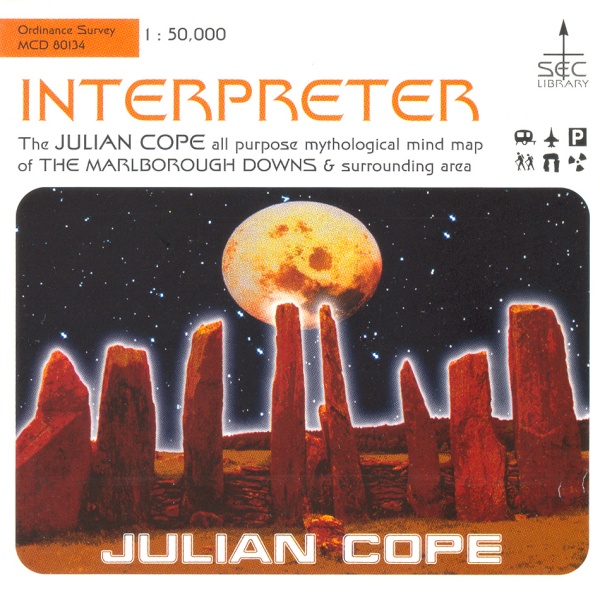
12th studio album (some file it as his 13th and probably include his collaboration album Rite) by Julian Cope is like its predecessor 20 Mothers (Aug. 1995) released on Echo, as his final on another company after which he should only release his music via his own labels. Alledgedly, Cope had rejected to perform in the US, which made Echo cancel their work with Cope. The incident was perhaps the last straw, which made Cope turn his back on the established music industry and from hereon take full control of everything he would do. The album follows more or less the same musical paths as his '95 album, albeit as a stylistically narrower release, where the compositions are Cope's own neo-psychedelic mix of glam rock, beat, folk rock, space rock, and pop. Thematically, it varies between the cosmic, about space travel, and the more down-to-earth stories, but especially strong political positions are noteworthy, which take their starting point from Cope's commitment as an environmental campaigner. There has also been room for his 'Neolithic hobby', although it's only reflected in a poster and the album front cover.
Musically, this appears quite complex with a certain grandiosity, but still with a strict simplicity in the harmonies, as an echo of 70's nostalgia.
The album was not commercially successful, briefly peaking at number #39 on the UK albums chart, and with two singles - tracks #1 and #3 both peaking at number #34 on the singles chart.
Personally, I think there's too much room for distorted guitars, heavy rock attitude, orchestral arrangements, and a repetition of naïve choruses, but still: it's probably part of his fascination of space rock. On the whole, there is a lot of recycling without much originality and at times I find myself wondering if he had either Lou Reed, David Bowie, Tom Verlaine, Scott Walker, or Neil Young on his mind when he wrote and recorded individual tracks. However, it's not only in the somewhat more distant music history that he finds his inspiration. At times he takes completely different paths when incorporating new styles with electronic or a synth-pop touch - and wherever he moves, Cope's strength is to write songs and to speak his mind, even if the messages occasionally drown a little in pompous and odd mixtures of styles. And you really have to give it to him: despite pulling all kinds of stuff from his musical shelves, there's still a remnant of presence and strong universal musical skill at stake - a Copesque charm and completeness, which manages to elevate the album to anything but copycat and mediocrity.
The album was Cope's final on Echo and all of his subsequent music has been self-released either through his own label Head Heritage or through his internet site, carrying the same name, and where he has commented on this and that up until Mar. 2014 when he made his final post. However, he has kept releasing and issuing new albums via Head Heritage since.
Recommended.
[ allmusic.com 4 / 5 stars ]

08 July 2021

Julian Cope "20 Mothers" (1995)

20 Mothers
release date: Aug. 28, 1995
format: cd (ECHCD 5)
[album rate: 3,5 / 5] [3,58]
producer: Julian Cope
label: Echo - nationality: England, UK

Track highlights: 1. "Wheelbarrow Man" (live) - 2. "I Wandered Lonely as a Cloud" - 3. "Try Try Try" (Top of the Pops performance) - 4. "Stone Circles 'n' You" - 10. "Adam & Eve Hit the Road" - 15. "Senile Get" - 16. "The Lonely Guy"

11th studio album by Julian Cope is like the one year old predecessor Autogeddon released on the Chrysalis-owned sublabel Echo. With the album, Cope returns to his 'habit' of releasing extensive albums - 20 Mothers is nearly 72 minutes long and is divided into four 'phases', as was also the case with Peggy Suicide (Apr. 1991). His new album is similar to his most recent concept albums without it' being absolutely obvious where the focus lies, because it's more of a unifying album for all of Cope's thematic interests: climate and environment, the condition of our planet, consumerism, cars, religion, prehistoric cultures, and then as a more recent theme of his: stories from one's own lived life about family relationships. In the same way that themes are diverse, the music aspect is even more varied than on most of his other albums. Yes, there is the usual neo-psychedelia and space-rock, and then you'll also find indie rock, funk, and tracks with a clear folk touch, but also elements taken from Europop, synth-pop and rock & roll - in other words, the range is w--i---d----e, and the seemingly conceptual title, supported by the cover featuring family members - wife Dorian and friends, all of whom are actually mothers (as mentioned in the inlay) - then the album basically covers everything, and in that way it comes across as a bit of an all sorts mix - on all levels.
20 Mothers is by no means a bad album, the best side to it being Cope's stories, but at the same time it's somewhat incoherent and occasionally odd to listen to in its entirety.
[ allmusic.com 4,5 / 5 stars ]

 
back cover: 
Julian with his
two daughters

inside:
Julian with family and friends
(wife Dorian on Julian's right)

11 June 2021

Kraftwerk "The Mix" (1991)

2009 remaster
The Mix
release date: Jun. 11, 1991
format: cd (2009 remaster)
[album rate: 3,5 / 5] [3,38]
producer: Ralf Hütter, Florian Schneider
label: Kling Klang / EMI - nationality: Germany

10th studio album by Kraftwerk following a full five years after Electric Cafe (1986) isn't officially a compilation, although it may perfectly appear as that since it's dedicated to compositions stemming from all of the band's studio albums beginning with Autobahn (1974) right up to the most recent studio album Electric Cafe (1986). Ralf Hütter has offered his thoughts on why it's not to be considered a compilation or let alone a remix album, as others would claim. He states that these tracks are an expression of the band's live versions of well-known songs, all of which have been subjected to reshaping during the many years of performances. Since '86 percussionist Wolfgang Flür has left the band and as of '87, he was practically substituted by Fritz Hilpert. In 1990, Karl Bartos also left the band, after which Fernando Abrantes took over in his place and on the album here, but Abrantes left shortly after the release only to be replaced by Henning Schmitz.
Incidentally, 2009 is the year in which Kraftwerk reissued all of the it's essential albums in newly remastered editions - like this one - and they also reissued the box set Der Katalog (2004) with a back cover label '12345678', indicating the band's 8 studio albums from 1974 to 2003. Regardless Hütter's explanation, and intention, it doesn't change the fact that the tracks on The Mix have all been taken from previously released studio albums, and yes, they are here in completely new remixed versions. The album consists of 11 tracks and has a total running length of 65 minutes.
From both Autobahn (1974) and Radio-Aktivität (1975) only the respective title tracks have been included; from Trans Europa Express (1977) three tracks are included: the title track, "Abzug" and "Metall auf Metall"; from the album Die Mensch-Maschine (1979) only "Die Roboter" has found its way the this; from Computerwelt (1981) we again find three selected tracks: "Taschenrechner", "Computer Liebe", and "Heimcomputer", and from Electric Cafe (1986) only the song "Music Non-Stop" is included. With a bit of quick math, that sums up to only ten tracks, and that's because, in addition to album tracks, there's also room for "Dentaku", which is a Japanese version of "Taschenregner" in a slightly different version, originally featured as a B-side to the single release.
The album received a slightly luke-warm reception, but still landed at number #7 in Germany and at number #15 in the UK. Kraftwerk also released the new versions of "Die Roboter" and "Radio-Aktivität" as the two (promotional) singles from the album.
The Mix is a fine album without dazzling. However, I think that especially the earliest compositions have been altered and given a more modern sound in such a way that they certainly don't stand as improvements to the originals. Later well-known tracks have been exposed to a little bit of everything, and at the end, the album is mostly for fans and connoisseurs, as others will be better served with the original versions. And of course you're are free to think what you want about all their fine tracks they have passed on and not included here. You may ask yourself why on Earth they didn't just release a double album, when there's plenty of material to revisit? It's certainly not an essential release, which basically functions more as bonus material - an appendix you can easily do without.
[ allmusic,com, Mojo 3 / 5, Q Magazine, Uncut 4 / 5 stars ]


org. cover

03 May 2021

Les Negresses Vertes "Famille nombreuse" (1991)

Famille nombreuse

release date: Nov. 1, 1991
format: vinyl (gatefold) / digital
[album rate: 3,5 / 5] [3,68]
producer: Sodi & Clive (aka Clive Martin)
label: Delabel / Razzia Disques - nationality: France

Track highlights: 1. "Famille heureuse" - 2. "Perpétuellement vôtre" - 6. "Sous le soleil de Bodega" - 8. "Hou ! Mamma mia..." - 9. "Infidèle cervelle" - 10. "La France a ses dimanches" - 12. "Car c'est un blouze"

2nd studio album by French band Les Negresses Vertes, which here enlists eleven members, although the cover photos only counts ten members. Prior to this, the band featured on the international Cole Porter tribute album Red Hot + Blue from 1990 with their version of "I Love Paris".
Here, the band attempts to continue in the same style from Mlah (1989), but nevertheless with more polished arrangements, which lacks the rebellious streak that caused the band to be compared to Madness and The Pogues. However, the album does succeed in presenting a more common tone, where Mlah pointed in various directions and also reflected music from a sea of ​​styles, and in that regard Familie nombreuse is an album that roughly stays on the same ground throughout. It's original, but in my mind it's missing that extra kick the debut contained. Having said that, the music here is by no means poor, but at times sticks out as slightly uninspired, although I personally find that the album actually improves in the latter half - perhaps simply because these songs share some of the traits from Mlah.
Familie nombreuse [meaning 'large family'] is the band's final with the its front figure, lead vocalist, and one of its major songwriters: Helno Rota, who died of an overdose in '93 (at the age of 29), after which the band's line-up changed considerably. The band continued to release albums up until around 2001, after which they have been less active. However, around 2018 and up to the 30th anniversary of this very album, Les Negresses Vertes (reformed with several of the original members) resumed their live performances, playing tracks from Mlah in particular (see here and here - and here a promotion spot for their tour).
[ 👎allmusic.com 2 / 5 stars, Popdose review ]

30 November 2020

The Gun Club "Lucky Jim" (1993)

Lucky Jim
release date: Sep. 1993
format: cd
[album rate: 3,5 / 5] [3,58]
producer: Jeffrey Lee Pierce, Peer Rave
label: Solid Records - nationality: USA

Track highlights: 1. "Lucky Jim" - 2. "A House Is Not a Home" - 3. "Cry to Me" - 6. "Idiot Waltz" - 7. "Up Above the World" - 8. "Day Turn the Night" - 10. "Desire" - 11. "Anger Blues"

6th and final studio album by The Gun Club follows 3 years after Pastoral Hide & Seek (Oct. 1990), 2 years after the Divinity (ep), and 1½ years after the Jeffrey Lee Pierce project-album Ramblin' Jeffrey Lee & Cypress Grove with Willie Love (Mar. 1992). Since the 1990 album, The Gun Club has been reduced to a trio as guitarist Kid Congo Powers left to pursue his own project-band, Congo Norvell. The trio here consists of Jeffrey Lee Pierce on vocals and guitar, Romi Mori on bass, and with Nick Sanderson on drums, who once again had been out, but returned for this.
You could argue that the band's style hasn't evolved much since The Las Vegas Story from 1984 but as practically no-one else sounds quite like The Gun Club, nor like Jeffrey Lee Pierce, that's not really something you could hold against them. The garage rock and bluesy rawness has subsided somewhat on the account of an old-school Hendrix-like guitar-founded blues rock tone. In an interview with Louder, Pierce's girlfriend Romi said, she found that Pierce became increasingly obsessed on playing the guitar - he had a Hendrix-thing going on, and she felt it took away some of the qualities in his vocal performance [Louder interview, also with Kid Congo Powers]. The relationship between Pierce and Romi is said to have come to an end during the recordings of the album, which didn't make things easier. Pierce's lacking health saw him hospitalised several times and he has been described as hallucinating more than usually. Musical simplicity, however, remains on the album and there's still an edgy tone to the music and the fragile / desperate voice of Pierce is found on top of all compositions. It's by no means poor or mediocre, I just miss that unspecified greatness in larger doses, which is something else than melancholic despair, but the album surely has its moments - and then it reveals a new level of guitar skills, which here is handled by Pierce.
A year later, Pierce and Romi had split for good - she now befriended Sanderson and together they founded the band Freehat (around 1999) with ex-members Jim Reid and Ben Lurie of The Jesus and Mary Chain. Pierce relocated to the US, to his father's house and to him to be looked after in the attempts of sobering up. Here, Pierce managed to write his memoirs, and he also made attempts in early '96 of finding new musicians to reform The Gun Club, which never materialised, and in late March, three years following Lucky Jim, Jeffrey Lee Pierce himself called it a day, as he was found dead - his body gave in, posssibly resulting from a life-style that included long-time heroin addiction and with various deceases as side-effects.
Lucky Jim is not the band's best, nor its worst. It's a genuine The Gun Club-album and as such quite fascinating stuff. Lee Pierce had been a youngster dreaming of being someone doing wild things, or actually: he wanted very much to become someone like William S. Burroughs, or Charles Bukowski, more than a rock'n'roll- icon. He wanted to be be out there living his life as a drunk and as a heroin addict, simply because he idolised that lifestyle on the extreme edge. He soon ended there himself and never really came back. People around him were shocked, petrified, or struck by his otherness, his vigor, his appetite, and his ramblings - and no matter what, he left us with enduring original fine music.

"No one sings the blues like Jeffrey Lee". [ ♱Jeffrey Lee Pierce, Jun. 27, 1958 - Mar. 31, 1996 ]
[ allmusic.com 4 / 5 stars ]


US cover   German cover

19 November 2020

Chet Baker "Embraceable You: Chet Baker Sings and Plays" (1995)

Embraceable You: Chet Baker Sings and Plays (compilation)
Release date: Jun. 19, 1995
format: digital
[album rate: 3,5 / 5]

This is a fine album if one hasn't got Chet in the collection. The songs are of the romantic and more melancholic type that was his biggest strength. His soft and clear voice and trumpet sounds much alike - in agony of love lost or a love never realised. The album contains 13 fine jazz ballads written by Gershwin, Johnny Mercer, Rodgers & Hart, among others.

07 April 2020

Thin Lizzy "Wild One - The Very Best of Thin Lizzy" (1996)

Wild One - The Very Best of Thin Lizzy (compilation)
release date: Jan. 9, 1996
format: cd
[album rate: 4 / 5]
producer: various
label: Vertigo Records - nationality: Ireland

A compilation album by Thin Lizzy released as a 10 years commemoration tribute to Phil Lynott, who passed away Jan. 1986. Now, this is a mighty fine collection of 19 tracks featuring both hard rock energetic rock classics and more soft rock ballads. It represents most of Lynott's career in Thin Lizzy and also contains the early Thin Lizzy classic "Whiskey in the Jar" a traditional arranged by Lynott, Bell and Downey that many associate with the band but which wasn't released on any of their studio albums. And then there are two live recordings showcasing the strength of the band's live performances.
This compilation probably isn't the best with the band but it's also a rather impossible task to make the one best of compilation with a band, who has been through such diverse stages. Some people really like their early works, others prefer the simplistic hard rock-period, and even in that segment you'll find various preferences - some will enjoy the heavy metal-sound and others the twin-guitar harmonies - and then there's the big portion of pop rock-balladry that have found way to another segment of fans. And you  just cannot satisfy them all. Some will have an affection for the Eric Bell-period, the Robertson-Gorham period, the Gary Moore-influence, and the Snowy White-era. You'll find dozens of best of albums, some 2-disc compilations, some even more extensive but they probably won't feel completely satisfactory anyway. I like the 2020 3-disc Essential issued by Universal, which in a way is like an extended version of the album mentioned here, as it both gives room for classics from various stages, including hard rockers, softer ballads, and some live versions - only with a broader repertoire - but to imagine that you will be able to go out and find a single-disc or a single vinyl album containing the best songs is not likely.
Recommended.
[ allmusic.com 4,5 / 5, Q magazine 4 / 5 stars ]

06 April 2020

Fatboy Slim "You've Come a Long Way, Baby" (1998)

You've Come a Long Way, Baby
release date: Oct. 1998
format: cd / digital (2008 2cd 10th Anniversary Edition)
[album rate: 4 / 5] [4,08]
producer: Fatboy Slim
label: Skint Records - nationality: England, UK


2nd studio album by Fatboy Slim following his fine debut Better Living Through Chemistry from '96 is like that released on Skint and produced by Fatboy Slim (aka Norman Cook). The title is taken from the American cigarette brand Virgina Slims, which was sold (to women as target group) in the 1960s and 70s using the slogan "You've Come a Long Way, Baby" - the title here then is used with reference to the cover and the official video for track #1 as an ironic statement about the human race.
Despite being crafted almost only using heavy sampling, the album is very much of a whole, building on hooks, catchy phrases and small bits from this and that, primarily soul and funk artists, but the common denominator is something original within the big beat style of electronica.
The album spawned four single releases and they all peaked in top 10 on the UK singles chart list. In order, the songs selected for single releases were tracks #2, 4, 9, and 1 with the first two preceding the album release and the last two issued in '99. The third single, "Praise You" (Jan. '99) followed by an official video creation that was work of geniality performed the best peaking at #1 in many countries world-wide including the UK, Scotland, Iceland, and it peaked at #2 in the US on the Alternative Songs list. The last single also performed quite well peaking at #1 on the UK Indie list (#2 overall) and furthermore, the video for "Praise You" won three major awards at the 1999 MTV Video Awards, and in 2000 it was voted #1 of the 100 best music videos ever released in an MTV anniversary poll. The album peaked at #1 in the UK, and it has sold more than 3 mio. copies worldwide and is enlisted in "1001 Albums You Must Hear Before You Die".
The album is undoubtedly Fatboy Slim's best and most coherent album. In 2008, a 2-disc 10th Anniversary Commemorative Edition with 10 bonus tracks was issued on Skint.
Highly recommended.
[ allmusic.com, Select 5 / 5, 👍NME, Muzik, Q Magazine, Spin 4 / 5, 👎Rolling Stone 3 / 5 stars ]

1998 Favourite releases: 1. Grant Lee Buffalo Jubilee - 2. Mark Hollis Mark Hollis - 3. Fatboy Slim You've Come a Long Way, Baby

28 March 2020

Fatboy Slim "Better Living Through Chemistry" (1996)

Better Living Through Chemistry [debut]
release date: Sep. 16, 1996
format: cd (BRASSIC 2CD)
[album rate: 4 / 5] [3,96]
producer: Fatboy Slim
label: Skint Records - nationality: England, UK

Track highlights: 1. "Song for Lindy" - 2. "Santa Cruz" - 3. "Going Out of My Head" - 5. "Everybody Needs a 303" - 8. "First Down"

Studio album debut by Fatboy Slim aka Norman Cook (aka Quentin Leo Cook) former bassist of The Housemartins. Musically, this doesn't have much in common with the former jangle pop band; however, Fatboy Slim may be Cook's new pseudonym but his experiments within the electronic scene started way way earlier, and if he's associated with The Housemartins, it's rather undeserved, 'cause fact is, he released his first electronic solo album All-Star Breakbeats Volume 1 in 1990 under his own name as well as the follow-up Skip to My Loops in '92 - both collections of... loops to use when sampling, and even before that Norman Cook was the leader and main songwriter of the British electronic dub project-band, Beats International, which had a short life-span from '89-92 releasing one fairly successful album Let Them Eat Bingo with the international hit single "Dub Be Good to Me". Before playing in The Housemartins he was already an established DJ of the early 1980s playing primarily American "black music". After ending the Beats International project, Cook went on and formed the acid jazz and hip hop trio Freak Power, which existed from '93-96 experiencing some success before internal friction had him choose a solo career and Fatboy Slim was invented. He has released music by dozens of pseudonyms incl. Pizzaman, Cheeky Boy, Chemistry, Charlie Stains, and many others. In fact, he is known for being the British artist to have featured most times on the UK singles chart list with the most aliases.
Anyway, Better Living Through Chemistry is an electronic samples album of big beat music, which really put him on everyone's lips in the mid-90s, and it's the first of two consecutive albums by Fatboy Slim to be enlisted in "1001 Albums You Must Hear Before You Die". The album contains some really fine hooks and samples, but to me, it's still an album pointing to his past as a DJ mixing this and that, and being allover the place in terms of style. His force of nature keeps him so busy that creating a coherent release seems the impossible mission, although, he would do even better on the follow-up. That said, Better Living Through Chemistry is an energetic and vibrant dance album of high importance for the electronic pool of styles.
[ 👍allmusic.com 4 / 5, 👎Rolling Stone 3 / 5 stars ]

1996 Favourite releases: 1. Bob Mould Bob Mould - 2. Fatboy Slim Better Living Through Chemistry - 3. Ryuichi Sakamoto 1996

08 December 2019

Bill Frisell "The Sweetest Punch" (1999)

The Sweetest Punch

release date: Sep. 21, 1999
format: cd
[album rate: 4 / 5] [3,96]
producer: Lee Townsend
label: Decca - nationality: USA

Studio album by American jazz fusion guitarist Bill Frisell is actually fully titled: The Sweetest Punch - The New Songs of Elvis Costello and Burt Bacharach Arranged by Bill Frisell, and as the title suggests all songs (but one) are the songs released by Elvis Costello & Burt Bacharach on their '98 collaboration album Painted From Memory. The Costello / Bacharach collaboration work included Costello sending Bacharach his demo takes of his half-finished compositions upon which Bacaharach would contribute with ideas for a music score and the two would then elaborate on the songs, however, Frisell was already introduced to the Costello demos, sent to him by Costello, and Frisell would then use these early sketches to compose / re-arrange them to his very own interpretations, and this albums is the result of that process and therefore not Frisell's arrangements of the finished album.
Costello is featuring vocalist on two tracks (#2 and 10) and Cassandra Wilson also on two (#5 and 10), and apart from these three vocal jazz arrangements all other compositions are held in a subtle big band jazz fusion-style.
Costello / Bacharach harvested critical acclaim for their collaboration album, which is a fine piece of work. This, however, is something entirely different, and I also think it comes out as the slightly better and essentially more well-founded whole. I really enjoyed the live album Deep Dead End (1995) by Costello and Frisell, which is why I was eager to check this one out, and I'm glad that I did 'cause I think that Frisell has made an even stronger album than the original Costello / Bacharach release. And then this release only follows four months after Frisell's fine Good Dog, Happy Man (May 1999).
These compositions are beautifully arranged and Frisell shines with his drops of elegant dozes of subtle jazz notes here and there. As a consequence of the recording process, where Frisell didn't know of the final Costello / Bacharach compositions before finishing his own recordings this album delivers on a different scale, and what a gem it truly is.
Highly recommended.
[ allmusic.com 3,5 / 5 stars ]

22 November 2019

Ramblin' Jeffrey Lee & Cypress Grove with Willie Love "Ramblin' Jeffrey Lee & Cypress Grove with Willie Love" (1992)

2006 remaster
Ramblin' Jeffrey Lee & Cypress Grove with Willie Love
release date: Mar. 1992
format: cd (2006 remaster)
[album rate: 3,5 / 5] [3,32]
producer: Jeffrey Lee Pierce
label: Flow Records - nationality: USA

Studio album by The Gun Club frontman Jeffrey Lee Pierce recorded in between albums with his primary band and released as Ramblin' Jeffrey Lee & Cypress Grove with Willie Love. Jeffrey Lee plays guitar and sings together with guitarist Cypress Love and drummer Willie Love. Carl La Fong isn't credited on the album but he appears to playing the bass. The majority of the tracks are cover versions of classic blues songs written by various artists, which include Don Nix, Willie Brown, and Chester Burnett. The songs are all well-played and cleverly arranged, and despite the fact that the original blues isn't really my kinda style, this is quite originally sounding with a lot of genuine heartfelt craftsmanship to it, so to ignore it would be a shame. I like it, It's gooood.
The 2006 remaster comes with the additional title: "9 Lives No. 5" indicating nine releases made by Flow Records to pay tribute to Pierce - the '9 lives' of course referring to how Pierce managed to stay alive, when others would've surcumbed earlier being exposed to what he went through.


org. cover

26 October 2019

Elvis Costello with Burt Bacharach "Painted From Memory" (1998)

Painted From Memory
release date: Sep. 28, 1998
format: cd
[album rate: 3,5 / 5] [3,52]
producer: Burt Bacharach & Elvis Costello
label: Mercury Records - nationality: UK / USA

Track highlights: 1. "In the Darkest Place" - 2. "Toledo" (live) - 3. "I Still Have That Other Girl" (live on Letterman) - 4. "This House Is Empty Now" - 9. "Painted From Memory" - 10. "The Sweetest Punch" - 12. "God Give Me Strength"

Collaboration album by Elvis Costello and Burt Bacharach subtitled "The New Songs of Bacharach & Costello", which is the result of a collaborative partnership that had been initiated with the song "God Give Me Strength" for the comedy film "Grace of My Heart" (1996). Apparently, all songs were made with Costello writing sketches of songs, sending demos to Bacharach - as well as to Bill Frisell, who would later release his interpretations of the Costello (and Bacharach?) demos as The Sweetest Punch (1999). All songs are credited Costello / Bacharach and the duo are credited for voice / piano respectively and they are supported by Steve Nieve on keyboards, Jim Keltner on drums, Greg Cohen on bass, and with Dean Parks on guitar. Bacharach is also credited for his role as arranger and conductor as both a horns and strings sections participate.
Musically, it represents a variety of styles ranging from baroque pop, vocal jazz, singer / songwriter and some folk and country elements not to forget chamber pop, and then it's all arranged with heavy use of horns and strings much in a Bacharach tradition.
The album was met by positive reviews and acclaim from near and far, and it was nominated to a number of prizes.
I heard about the project quite early and just purchased the album without actually listening to it, and I may not have spent my money on it immediately, had I listened through the whole album first. From my perspective, critics seems overly happy about the songwiting qualities - a dimension I've always found difficult when speaking of music. It really doesn't matter how good the lyrics are, if the music is crap. Now, this is far from that, but I just don't find that the Costello / Bacharach excessive production cocktail an interesting lyrical foundation. That said, it's far from bad, it just sounds too much as a replication of former Bacharach productions where, in fact, Costello heighten the quality thanks to his strong vocal performances. I like it because of Costello's vocal jazz performance, but to me the later Bill Frisell interpretations of the songs is simply a better album.
[ allmusic.com 4,5 / 5, Spin, Rolling Stone, Q Magazine, NME 4 / 5 stars ]

16 August 2019

Elvis Costello & The Attractions "All This Useless Beauty" (1996)

All This Useless Beauty

release date: May 14, 1996
format: cd
[album rate: 3,5 / 5] [3,62]
producer: Geoff Emerick and Elvis Costello
label: Warner Bros. Records - nationality: England, UK

Track highlights: 1. "The Other End of the Telescope" - 2. "Little Atoms" - 3. "All This Useless Beauty" (4 / 5) - 4. "Complicated Shadows" - 5. "Why Can't a Man Stand Alone?" - 6. "Distorted Angel" - 10. "You Bowed Down"

16th studio album by Elvis Costello following Kojak Variety (1995) is his first in a decade since Blood & Chocolate (1986) but also his final to feature his old backing band The Attractions on all tracks [see Brutal Youth]. And then it's also his last studio album on the Warner Bros. Records label (a best of album, Extreme Honey, subtitled "The Very Best of Warner Brothers Years" from '97 would be his final issue releasing him from his contract with Warner).
All songs here is a collection of songs that Costello intentionally wrote for other artists to record and two of the these were written and composed with other artists: track #1 with Aimee Mann, and track #7 with Paul McCartney.
It's not a return to the sound and tempo of former albums delivered together with The Attractions, but it's neither a follow-up to other recent releases, where he has experimented with classical material and roots rock, country and traditional folk. Before his '95 album he released the acclaimed Brutal Youth (1994) with reminiscences of his heydays with his renowned backing band, but not really in that neighbourhood either. Then what is it? To compare with former Costello works it sits somewhere in between - and could be described as the combination of three albums: the stripped-down and pure Brutal Youth, the softer Mighty Like a Rose (without the heavy arrangements) and the personal, much varied, and yet unique sound of Spike.
Personally, I had stopped following new material from Elvis after his '95 album. My impression at the time was that he had peaked long before that and had his best years behind him, Although, what years they were! 'Cause no mater what, how could he come up with anything new without risking to to fail?! At this point in his massive career, he has been around all corners of genres and styles, he had covered and played with music greats. And perhaps that's what he cleverly unfolds here when he mix EVERYTHING he has done and showcases his 'roots rock' fascination, perfections his Dylanesque composer skills, points to popular music icons of the sixties and plagiarises his older self in completely new tones. It's all Costello, and he can do anything. I still think his best years were back then in the '70s and 80s, but nevertheless, I should have paid this album some attention in '96 'cause fact is, it's much better than many of his other recent releases and up there close to his '94 album. It contains many strong compositions - perhaps not as musical originals but as a songwriter, boy, he really still delivers.
[ allmusic.com, NME 3,5 / 5, Rolling Stone, Uncut, Q Magazine 4 / 5 stars ]

25 July 2019

The Gun Club "Divinity" (ep) (1991)

Divinity
(ep)
release date: Aug. 1991
format: cd
[album rate: 3,5 / 5] [3,48]
producer: Jeffrey Lee Pierce
label: New Rose Records - nationality: USA

Track highlights: 1. "Sorrow Knows" - 2. "Richard Speck" - 3. "Keys to the Kingdom" - 4. "Black Hole" - 6. "Yellow Eyes" (Live) - 7. "Hearts" (Live)

EP release by The Gun Club following 10 months after Pastoral Hide & Seek (Oct. 1990). The album was originally released as a 7-track double vinyl ep consisting of 4 new compositions and 3 live tracks stemming from the band's farewell tour from a concert in France. The cd issue comes with 8 tracks, adding a remix of "St. John the Divine", a song that appears in its original version on Pastoral... - with the three live tracks put at the end of the cd. The band's drummer Nick Sanderson had left the band after Pastoral..., and back here is Desi (aka Desi Desperate, aka Peter Kablean), who previously stood in as an untrained substitute to handle drums on the final performances for the band's farewell concerts in Dec. '84 as Terry Graham already left before Jeffrey Lee Pierce then finally broke up the band. Pierce and girlfriend and bassist Romi Mori stayed in Amsterdam but Kid Congo Powers is now back on guitar, and with Desi these four constitute the new quartet. This is however, the final release with Powers, who should leave again the following Spring of '92.
Dvinity appears to have been made at point when Pierce wanted to record a follow-up to the 1990 album but apparently had been unable to write enough material for a normal album. Also, it seems that Pierce went through a rough period with poor health due to his substance abuse. Anyway, all four new compositions are strong songs that recount some of the characteristics of the band, but the album is a strange breed. The first half takes you into the sensation of what could've been another full-length and then a new mix of an old song, which basically sounds like the original, but it transports you elsewhere before we enter three good live recordings, which in a way both document the energy in the vocal and instrumental performance / the very presence of Jeffrey Lee Pierce, yet also show us another side of the coin of a former great unity, which just isn't the same as the starting point of the album. The end-track is a live version of "Fire of Love" from Miami which in a way takes the sound downstairs in a muddy and distorted chaos of what sound more like a bad recording.
Divinity is a difficult album to review, but I think it will of course appeal to die-hard fans, but for others, it probably could feel like something is missing out. After this, Pierce' condition saw him hospitalised and the band activity was on a halt, although, the line-up once again went through some changes. Desi  was replaced by Simon Fish in early '92, shortly after, Powers left for good, and in early '93 the band was back as a trio of Pierce, Mori, and with Sanderson back on drums - ready to record what would turn out to be the band's final album, Lucky Jim (1993).

22 May 2019

Etta James "Her Best - The Chess 50th Anniversary Collection" (1997)

"Her Best - The Chess 50th Anniversary Collection", compilation
release date: 1997
format: digital
[album rate: 3,5 / 5]
producer: various
label: Chess - nationality: USA

20 track compilation album by Etta James.

21 May 2019

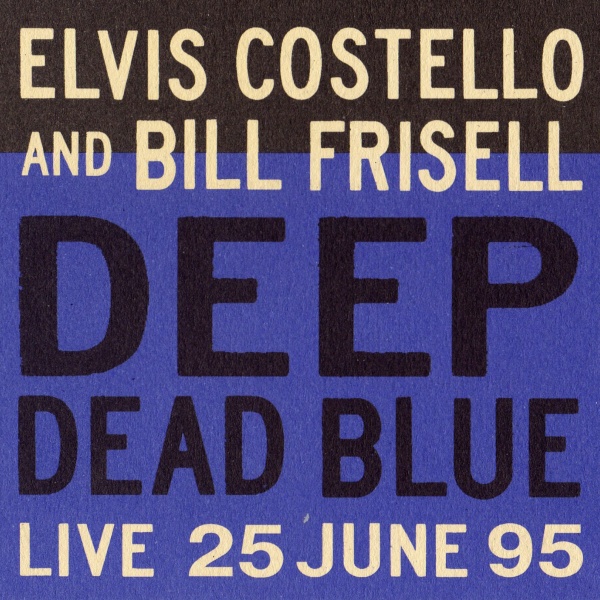
Elvis Costello & Bill Frisell "Deep Dead Blue" (1995) (live)

Deep Dead Blue (Live 25 June 95)
(live)
release date: Aug. 14, 1995
format: cd
[album rate: 3,5 / 5] [3,66]
producer: ?
label: Warner Bros. / Nonesuch - nationality: England, UK

Collaboration live album by Elvis Costello and Bill Frisell recorded live at the Meltdown Festival, Queen Elizabeth Hall RFH2, London, Jun. 25, 1995.
The album may be regarded as a Mini-album with its relatively short running time at just less than 27 minutes. It consists of seven tracks of which two are covers and only the title track is credited the duo (track #7).
Stylistically, it's primarily ballads of vocal jazz and jazz fusion, and Costello is alone credited his vocal and Frisell is alone credited his guitar work with no other musicians contributing. The American guitarist is very likely to be capable of playing anything but his primary domain is jazz fusion, and on this it's his touch with bolder melodic instrumental jazz.
Despite being really stripped down arrangements this concept works surprisingly well. Costello 'plays around' with his most intimate vocal with Frisell adding that swirling and appropriate foundation that makes it all sparkle.
[ allmusic.com 3 / 5 stars ]